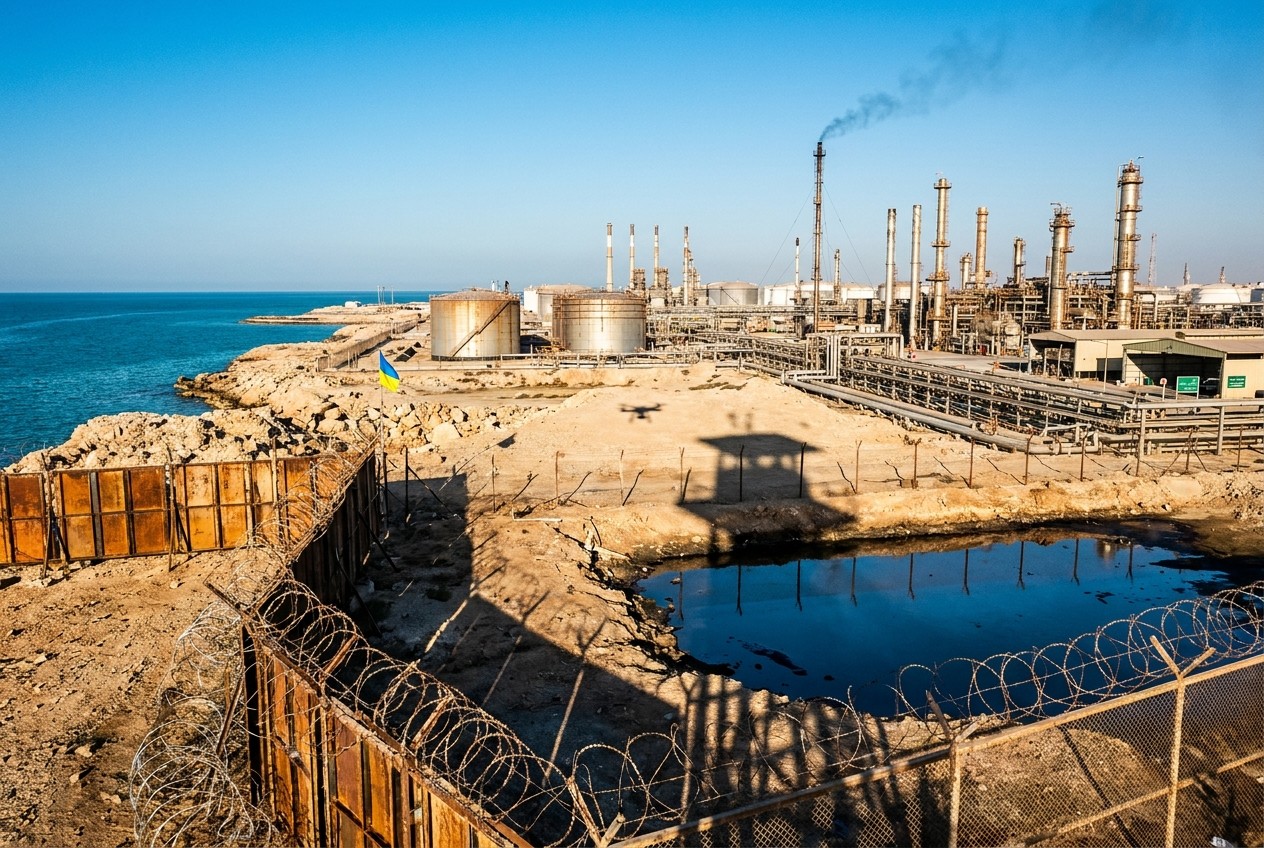
First Russian Diesel Tanker Under Trump-Moscow Fuel Deal to Sail for U.S.
10/25/2026 / By Garrison Vance
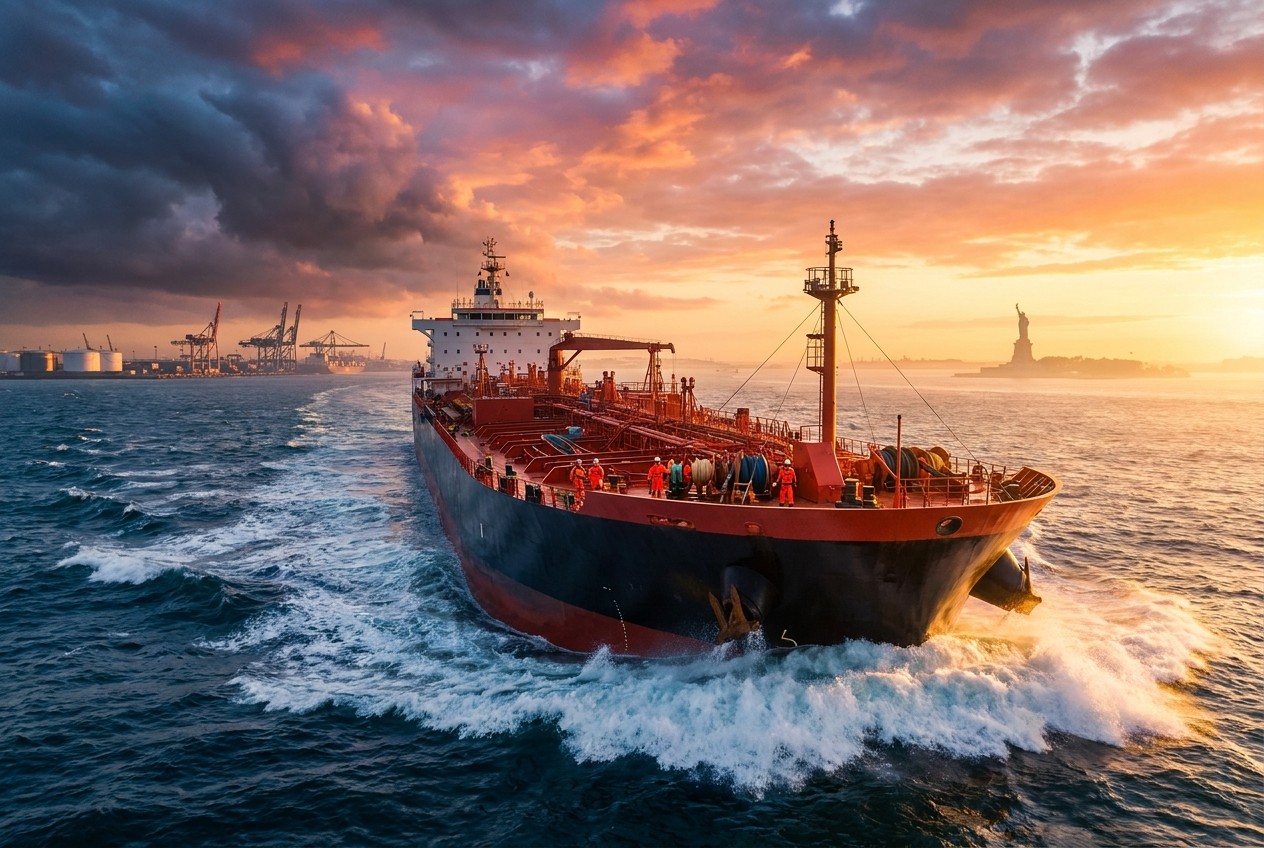
Russia has dispatched its first tanker with diesel for the U.S. on Thursday, Oct. 22, Deputy Prime Minister Alexander Novak said, according to the Vedomosti news outlet, after a deal with Washington [1].
The shipment is the first delivery under a fuel supply agreement struck by President Donald Trump and Russian President Vladimir Putin [2]. The vessel is expected to depart from Russia’s Baltic coastline, Novak told local media [3].
Trump has stated that, as part of his fuel deal with Moscow, Russia will immediately export 300,000 metric tons, or 2.25 million barrels, followed by 500,000 tons in November and 1 million tons “immediately thereafter” [4]. Additional shipments will follow, Novak said, adding that Russia will meet the United States’ needs to the extent of its capabilities [5].
Officials Confirm Terms and Thank Moscow for Lifting Export Ban
U.S. special envoy Steve Witkoff joined Putin for peace talks in St. Petersburg earlier in the day, according to reports [4]. Witkoff thanked Putin for removing export controls on diesel oil, saying the decision would help U.S. farmers and truckers affected by the diesel crisis [5]. He added that the decision would help farmers and truckers who use diesel and have been adversely affected by the crisis, as well as people worldwide [5].
Putin said Moscow is preparing several tankers that will depart one after another, and that the financial component must be ensured [5]. Following the announcements from both sides about diesel supplies, prices on global markets fell by 5% to 6%, Putin said, according to Clash Report [5]. He also said Russia could supply the United States with large quantities of fertilizers [5].
Market Context: Refining Crisis and Strait of Hormuz Tensions
Oil markets traded near five-year highs on Oct. 20, with Brent crude futures peaking near $112 a barrel, as tensions in the Strait of Hormuz continued, according to market data cited in the report [5]. UBS analyst Nana Antiedu said the primary driver remains the threat to Strait of Hormuz flows, noting that Iran’s First Vice President stated the country has no choice but to assert control over the waterway, keeping a risk premium embedded in prices [5].
The diesel deal comes amid a global refining crisis that multiple outlets have linked to Ukrainian strikes on Russian energy assets and ongoing disruptions in the Strait of Hormuz [5]. U.S. diesel prices climbed above $6.50 a gallon in September 2026, setting a new record as supply disruptions tied to overseas conflicts tightened global fuel markets, according to the American Automobile Association [6].
National average diesel prices surpassed $6 per gallon for the first time on September 10, 2026, according to price tracker GasBuddy, as the U.S.-Israeli war on Iran and Ukrainian attacks on Russia’s refineries squeezed supply [7]. A FreightWaves analysis reported that diesel supply is down 8% worldwide, with simultaneous supply disruptions in Russia and the Middle East removing approximately that share of global supply [8].
An International Energy Agency (IEA) report published Oct. 14 stated that “constrained middle distillate supplies” are expected “to persist well into 2027” [9]. The agency warned that diesel inventories have been heavily depleted due to the wars in Iran and Ukraine, and it will take time to recover [9].
U.S. Officials and Analysts Offer Divergent Views on Relief
U.S. Energy Secretary Chris Wright said on Oct. 19 that pump prices have peaked, according to his remarks cited in the report [5]. The statement followed a period in which diesel prices reached record highs, with the national average climbing above $6.50 a gallon in September 2026 [6].
The IEA and Goldman Sachs energy experts warned that there will be no quick relief, saying the refining crisis will likely linger well into next year [5]. The IEA’s assessment, published October 14, projected that tight middle distillate supplies would persist well into 2027 [9].
The first tanker’s departure is expected to be tracked by OSINT accounts on social media, according to the report, as additional vessels are prepared [5]. Additionally, Reuters reported that the Trump administration was weighing whether to lift sanctions on Iran’s “shadow fleet” tankers to address surging costs ahead of the midterm elections, as approximately 15% of the world’s fleet is under U.S. sanctions amid soaring shipping costs [10].
Conclusion: Shipments Proceed as Financial and Logistical Details Are Finalized
Russia is preparing several tankers to depart one after another, Putin said, with the first carrying 40,000 tons [5]. He said the first tanker would depart in two or three days, and that more would follow [5]. Financial arrangements remain a condition for the deliveries, Putin said, indicating that the financial component should be provided [5].
Additional volumes depend on agreements between the two leaders and Russia’s capabilities, Novak said [5]. The available reports do not include a joint statement from the U.S. and Russian governments detailing payment mechanisms or delivery timelines beyond the announced volumes [5].
References
- Russia says it will send first diesel cargo to US on Thursday. https://www.reuters.com/business/energy/russia-says-it-will-send-first-diesel-cargo-us-thursday-2026-10-21/
- Russia Sees First Diesel Cargo Sailing for US on Thursday. https://www.bloomberg.com/news/articles/2026-10-21/russia-sees-first-diesel-cargo-sailing-for-us-on-thursday
- Russia shipping first diesel cargo to US this week after sanctions …. https://www.spglobal.com/energy/en/news-research/latest-news/refined-products/102126-russia-shipping-first-diesel-cargo-to-us-this-week-after-sanctions-waiver
- First Russian Diesel Tanker To Sail For US Under Trump-Moscow Fuel Deal. http://www.pirateswithoutborders.com/information/806796-first-russian-diesel-tanker-to-sail-for-us-under-trump
- First Russian Diesel Tanker To Sail For US Under Trump-Moscow Fuel Deal. https://www.zerohedge.com/energy/first-russian-diesel-tanker-sail-us-under-trump-moscow-fuel-deal
- Brace For Impact: Diesel Costs Top $6.50 A Gallon Amid Worsening Supply Disruptions – NaturalNews.com, September 22, 2026.
- U.S. Average Diesel Prices Cross $6 a Gallon for First Time, GasBuddy Says – NaturalNews.com, September 13, 2026.
- Diesel Supply Down 8%: What Trucking Faces Next. https://www.freightwaves.com/news/diesel-supply-down-8-what-trucking-faces-next
- No Diesel Relief Until 2027, Consumer Prices Spike, Says IEA Report. https://thenewamerican.com/us/tech/energy/no-diesel-relief-until-2027-as-consumer-prices-spike-iea-report/
- US weighs lifting sanctions on Iran’s ‘shadow fleet’ to address surging costs. https://www.middleeasteye.net/news/us-weighs-lifting-sanctions-irans-shadow-fleet-address-surging-costs
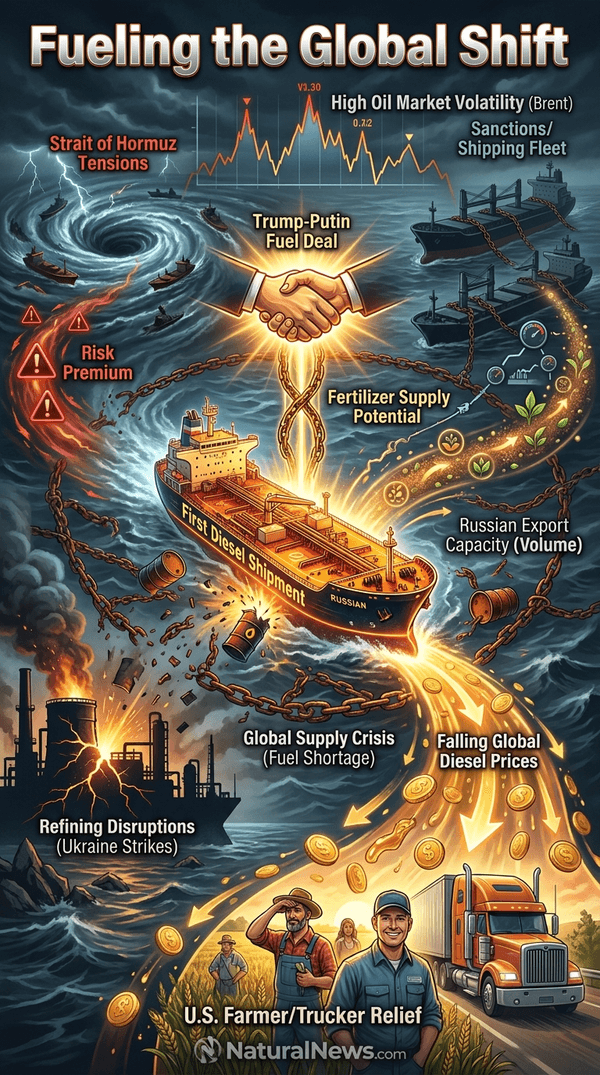
Explainer Infographic
Submit a correction >>
Tagged Under:
diesel, Donald Trump, economic collapse, energy supply, export bans, fuel crisis, fuel prices, globalism, market crash, midterms, oil prices, oil refineries, products, refining capacity, risk, Russia-Ukraine war, supply chain warning, supply disruptions, transportation, war on Iran, WWIII
This article may contain statements that reflect the opinion of the author
RECENT NEWS & ARTICLES